IndyKite Hub v.2 | Enterprise identity portal
Guides technical teams through complex identity workflows with clearer flows and explainability; built on Next.js and the Tyr design system.
Lead Product Designer | 2021 - 2024
Snapshot
What: Customer-facing portal for configuring and operating IndyKite’s identity services (EU/NA enterprise clients).
Who: Solution engineers, security/IT admins, implementation partners.
My Role: Discovery, UX/UI, design system integration, React/Next.js implementation for key flows; acceptance criteria and handoff-free delivery with FE.
Stack: Next.js, TypeScript, Tyr DS (tokens/components/docs), Storybook, Jest/RTL, Cypress.
Outcomes: Enterprise onboarding completed in one guided session (from multi-day back-and-forth) • Fewer UI bugs reached QA • Releases moved faster.
Outcomes
- Enterprise onboarding completed in one guided session (previously multi-day back-and-forth).
- Fewer UI bugs reached QA; reduced rework on visual/interaction defects.
- Releases moved faster with consistent patterns from the Tyr design system.
Problem → Insight
- Problem: Complex identity workflows, inconsistent UI, and heavy handoff slowed onboarding and created avoidable QA churn.
- Insight: A unified flow model and DS-driven components would cut cognitive load and let design and FE ship the same intent with minimal handoff.
What I did (design + build)
- Mapped end-to-end onboarding and configuration flows; simplified forms, progressive disclosure, and clearer error guidance.
- Integrated Tyr DS tokens/components; specified a11y states; partnered with FE to replace ad-hoc UI.
- Implemented key Next.js UI for high-risk steps; wrote acceptance criteria and test IDs for Jest/RTL/Cypress.
- Tightened handoff: component specs, usage rules, and Storybook examples; weekly design-dev clinics.
How it works (compact flow)
- Users authenticate and select tenant.
- Guided steps configure identity services and policies.
- DS components handle states, validation, and a11y.
- Telemetry events track completion, errors, and drop-offs.
- CI gates enforce unit/UI tests before releases.
Selected screens
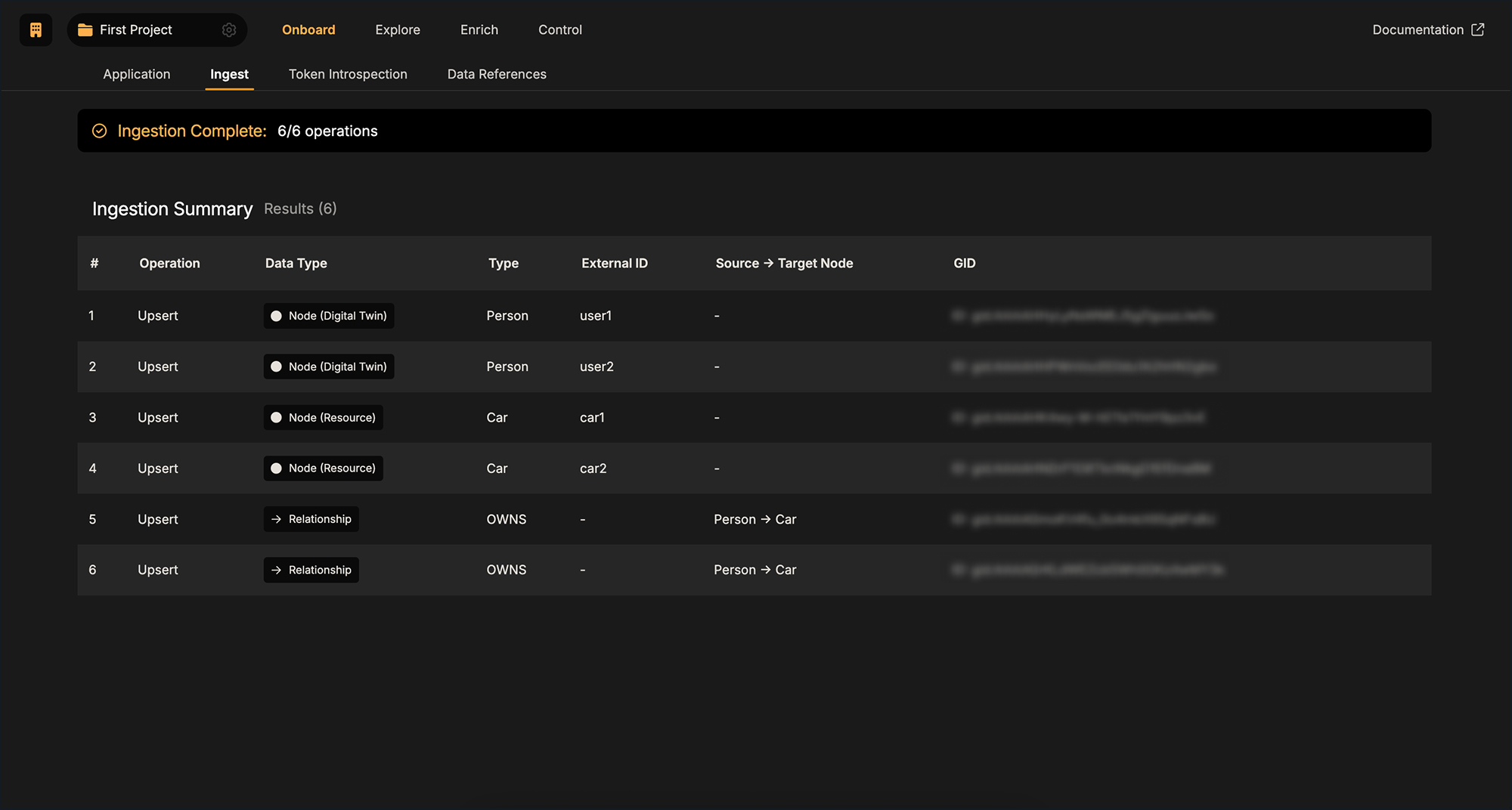
Ingestion complete — two people, two cars, and OWNS links added to the graph.

Data Profile confirms the model: Person owns Car, with type counts and relationship stats.
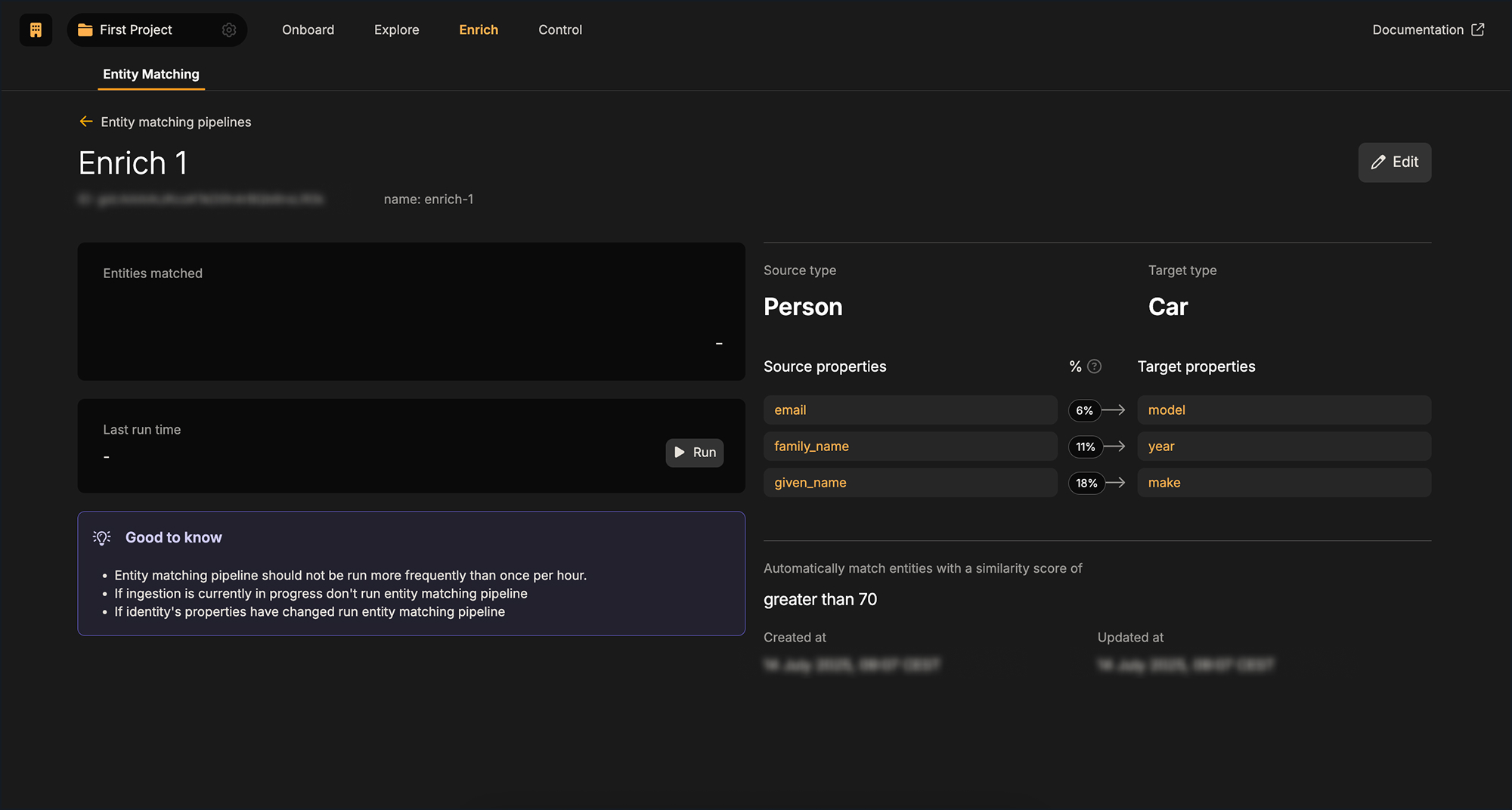
Entity Matching pipeline ‘Enrich 1’ maps person fields and sets an auto-match threshold.
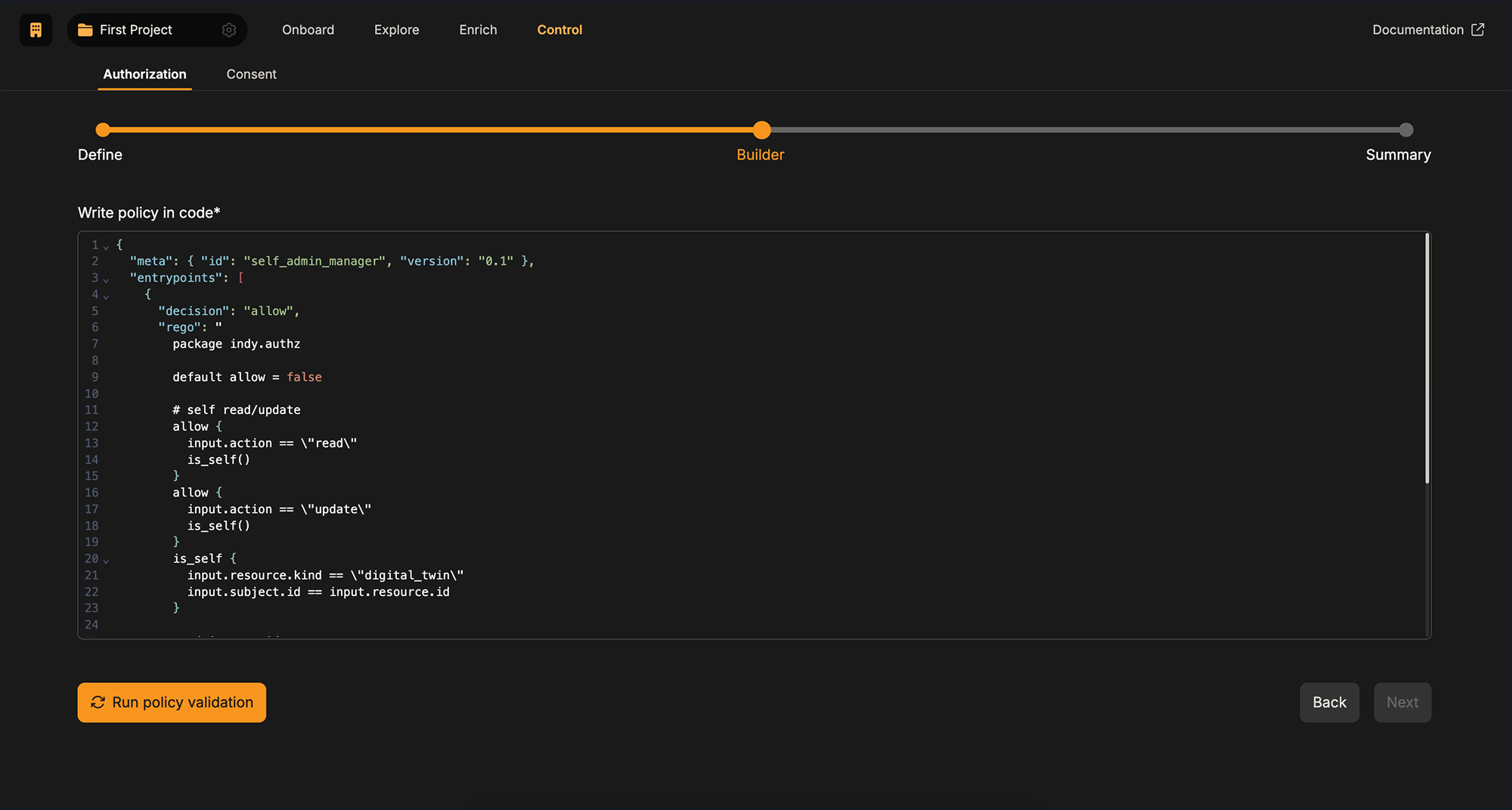
Authorization policy in Rego: deny by default; allow self read/update for digital twins.
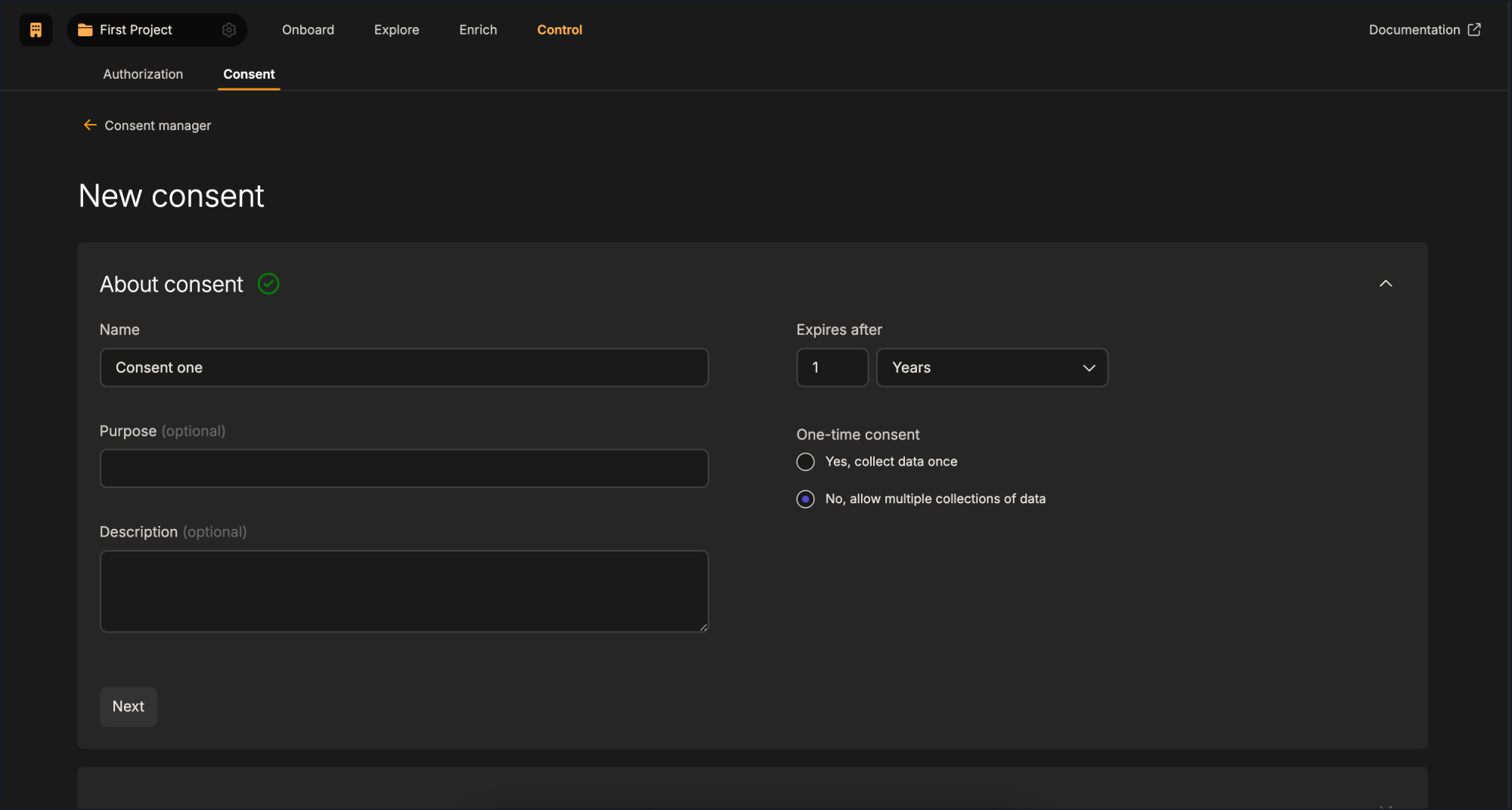
Consent manager: create a reusable consent with expiry and collection options.
Trade-offs & constraints
- Prioritized high-traffic flows first; deferred long-tail admin tools to later releases.
- Kept the DS lean to land adoption; postponed advanced components until usage data justified them.
What’s next
- Explainability for key decisions (tooltips and “learn more” drawers).
- A11y sweep for high-contrast mode; expand keyboard shortcuts.
- Experimentation on step grouping to reduce time-to-complete further.